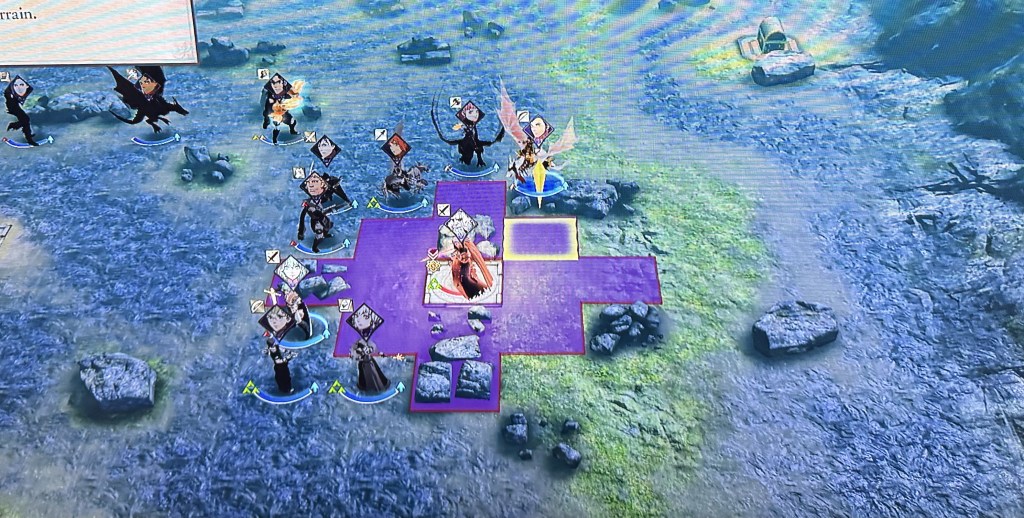
Before I am called a filthy casual and thereafter swiftly maimed, I will quickly announce that this article is going to analyze the title of the game only. This game is my childhood game and I absolutely adore this banger of a game. One thing Three Houses goes above and beyond in is the depth of the stories, the funny and usually profound supports, and the compelling characters. The masterful title itself captures the essence of the Fire Emblem: Three Houses experience and I want to talk about it.
I always thought that Three Houses was an entry that felt pretty detached from what the rest of the franchise is, taking place in the brand new continent of Fódlan. I was today years old when I realized that the so-called “Fire Emblem” of this universe is the Crest of Flames.
Fire = Flames, Emblem = Crest.
So Byleth IS the Fire Emblem (Alear moment).
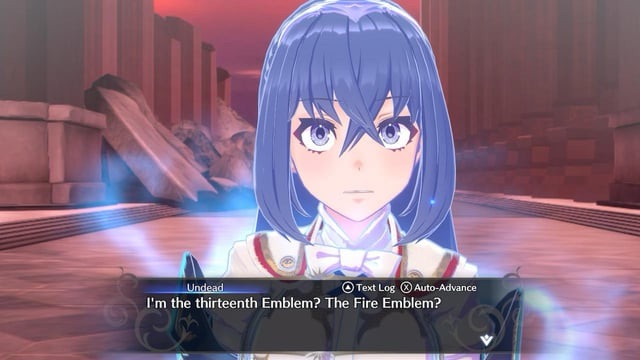
The land of Fódlan is riddled with warfare, conflict, and turmoil due to the various Emblems of nobility, and Byleth, as the Fire Emblem themself, brings peace to the world.
Let’s look at the subtitle “Three Houses”. Now, I’ve seen many people laughing at this pretty simple title, and I’ll admit, I had been one of them. What may seem like a childish, bland title actually foreshadows the biggest thematic twist of the game: the timeskip. Pre-timeskip, we coincidentally encounter the three house leaders, Edelgard, Dimitri, and Claude, in Remire Village. We are introduced to our dear students, each grouped by the nation they hail from, into the three houses: the Black Eagles, the Blue Lions, and the Golden Deer. Like conventional dormitories in colleges, the houses represent a community of students in an educational setting (although FE3H students don’t live together by house lol). As Byleth fatefully chooses their affiliation with a house, the war breaks out. Post-timeskip and post-Byleth’s-mysterious-five-year-slumber, the houses of Garreg Mach come to represent the political factions of Fódlan, or the political “houses”. Members of each Garreg Mach “house” fight for their homeland’s royal house or their country’s dynastic noble lineage. In the post-timeskip context, house holds the same meaning as when they talk about the historical House of Tudor of England. Some even fight for the success of their own noble houses (ex., the man, the myth, the legend: Lorenz Hellman Gloucester). It’s a phenomenal double entendre that I think about way more often than I should.
Well, it should be no surprise that the original Japanese title is, quite literally, peak poetry as well. The Japanese title (ファイアーエムブレム 風花雪月) comes from the old Chinese poem by Shao Yong of the 11th century. The characters respectively mean “Wind, Flower, Snow, Moon” and the poem conveys the ephemeral beauty of the changing seasons and passing times, as well as the pettiness of human worries and littleness of human life in comparison. Believe it or not, each Part 2 chapter title is “Verdant Wind”, “Crimson Flower”, “Silver Snow”, and “Azure Moon”. Woah.
Each main lord represents the natural entity of their distinctive part title. As Marianne herself canonically notes, Claude is like the cool, fresh breath of summer wind blowing through the land of Fódlan, a harbinger of new ideals and diversity. Edelgard is the first bud of a crimson flower that heralds a new world of spring, as she ruthlessly cuts a path of blood to realize her ideal of creating an almost inconceivable and definitely blasphemous world without Crests. The Church of Seiros remains grounded in its belief in Crests, a quiet, holy, yet all-encompassing presence throughout Fódlan, like the silver snow of wintertime. Dimitri is the lonesome moon lost in the darkness of the night, but through the warm hands of Byleth he regains his azure gleam, as bright as the autumn moon.
Not only that, but the poem’s message of the passing of time directly represents the game’s core gameplay mechanic and themes. The gameplay itself revolves around the flow of time (Rhea song reference) through the calendar system, through which the story progresses, and everyday life events and battles occur. In addition, many post-timeskip characters, most notably Edelgard, lament the cruel passing of time, reminiscing on the good old days of Garreg Mach and how vastly Fódlan has changed in the span of five years, where they went from students of the same monastery sharing feasts to sworn enemies to kill or to be killed on the battlefield.
I hope you cried reading this article by how poetic both titles are cuz I did while writing this. This game literally changed my life and brain chemistry. I am so eternally grateful to have played it.
 Scientific Narrative
Leave a comment