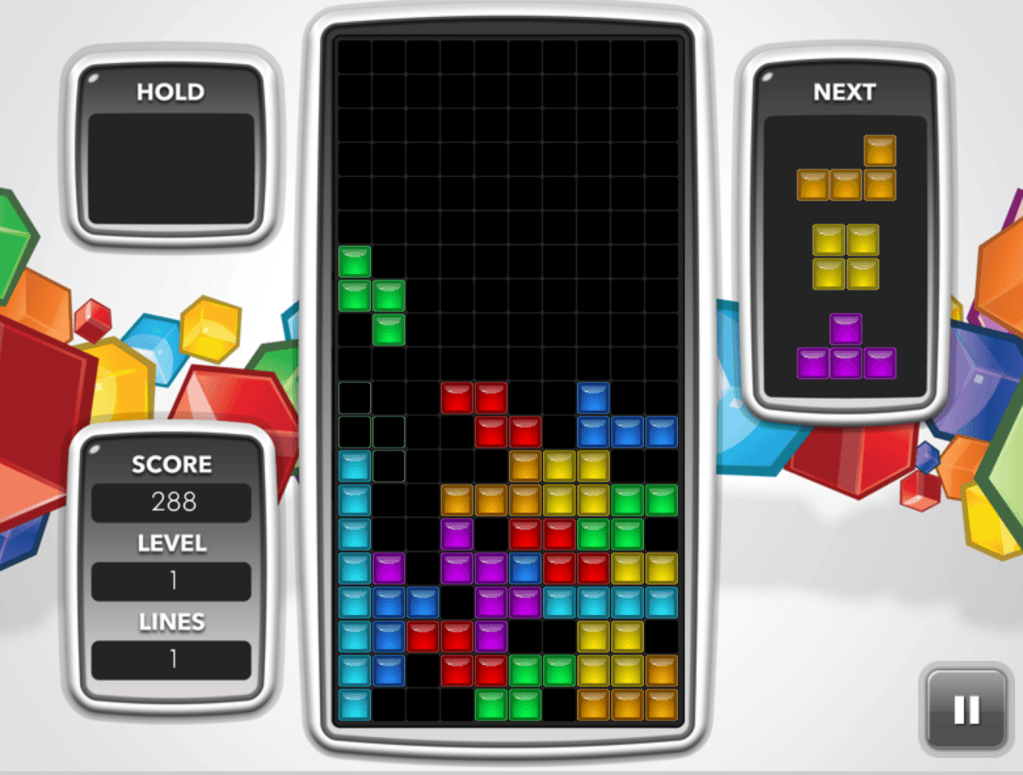
Have you ever done something for hours during the day, then later at night your mind keeps repeating the image again and again?
You could’ve been playing Tetris for hours, and you can still see the colorful Tetris blocks falling into place before falling asleep. Or you’ve crammed for a math test, and you can’t stop picturing the equations in your head at night.
This phenomenon is called the Tetris effect.
One theory behind this effect proposes that your brain continues processing the patterns in your thoughts and actions as it consolidates them into memories. When you repeatedly perform a task, like rotating Tetris blocks, the neural pathways involved in recognizing those problem-solving patterns become stronger. It’s a form of neuroplasticity, or the brain’s ability to reorganize and strengthen or weaken neural connections in response to experience.
Next time someone tells you that practice makes perfect, remember that it’s backed by neuroscience. Practice physically changes your brain.
Works Cited
https://www.psichi.org/blogpost/987366/511159/Stacking-Up-Thoughts-The-Tetris-Effect-and-Our-Brains


Leave a Reply