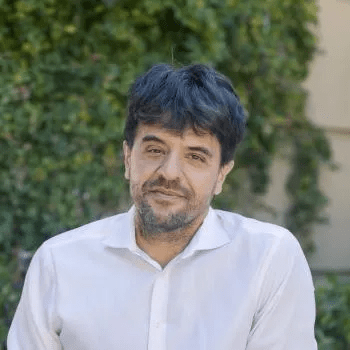
Considered one of the inventors of optogenetics, Karl Deisseroth pioneered a novel, precise method of neurobiology research. A D.H.Chen Professor of Bioengineering, Psychiatry, and Behavioral Sciences at Stanford University, Deisseroth’s works in academia as well as in clinical settings have made him one of the most remarkable neuroscientists of our generation.
Deisseroth’s works merge many biotechnological techniques, including optical, electrophysiological, computational, molecular, and behavioral approaches to study neural physiology and behavior. One of his most prominent works include his spearheading efforts in the field of optogenetics. Like its name, optogenetics uses laws of optics and genetics to manipulate specific neurons with precision. (Chen et al., 2022) By shining a light on photosensitive proteins that are selectively permeable for certain ions in and out the neuron cell membrane, researchers encode these proteins on adenoviruses, allowing them to precisely target specific regions of the brain to either excite or inhibit neural activity. In 2005, Deisseroth’s team published “Millisecond-timescale, genetically targeted optical control of neural activity” in Nature Neuroscience, the first-ever published paper on optogenetics. In this paper, Deisseroth adapted a microbial opsin, Channelrhodopsin-2 (ChR2), a light-sensitive ion channel, to control mammalian neural activities. This revolutionary biotechnology allows the manipulation of single neuronal activity through the simple and noninvasive method, allowing scientists to observe synaptic events at a neuronal level, instead of a regional one. (Boyden 2005)
Deisseroth’s works have revolutionized neuroscience research as well as medical practices in the psychiatric field. Optogenetics is a widely applicable bioengineering tool that has been adopted for in-human treatments today. As the strength of the technology lies in its precision, novel methods of neuromodulation therapy developed in recent years to control specific neural behavior in diseases such as Parkinson’s disease, epilepsy, etc., (Steinberg 2014) In a clinical trial named the RESTORE trial, optogenetic techniques are used to restore sight through the introduction of light-sensitive proteins into patient’s retinal cells (Beers 2023). A practicing clinician himself, Deisseroth currently works at Stanford School of Medicine in treating patients with neurodegenerative or psychiatric diseases.
Works Cited
https://pmc.ncbi.nlm.nih.gov/articles/PMC4293223
https://www.reviewofophthalmology.com/article/treating-the-untreatable-how-optogenetics-works
 Scientific Narrative
Leave a comment